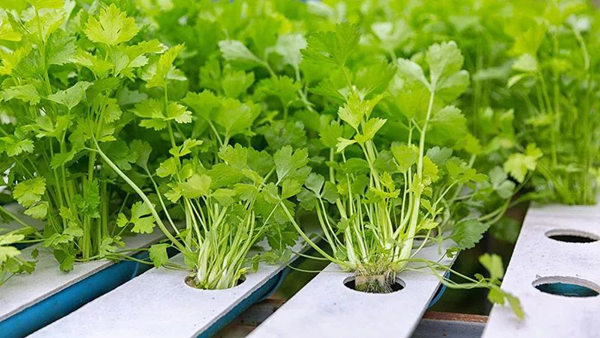
Celery is an annual or perennial herb, rich in vitamins, minerals, flavonoids and volatile oil compounds, is one of the important edible and medicinal vegetables.
In facility cultivation, the development of celery industry is restricted by diseases, lack of nutrients and high residue. Soilless cultivation can provide a good growing environment for crops, reduce the occurrence of pests and diseases, and has the advantages of saving labor, fertilizer and water, so it has become an important mode of vegetable cultivation development. Nutrient solution is an important environment for the survival of hydroponic vegetables. Different nutrient solution formulations and concentrations have important effects on the growth, quality and yield of vegetables.
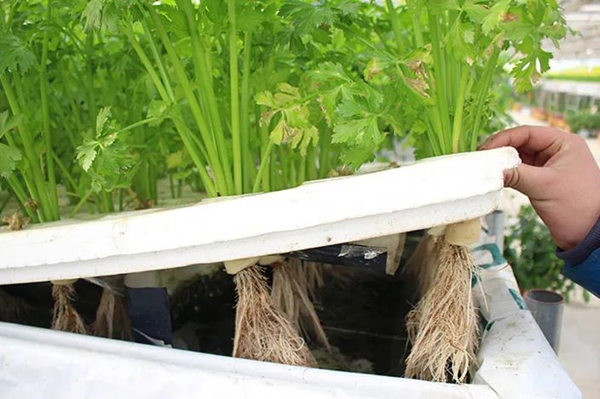
Calcium is an essential nutrient for plant growth, calcium deficiency or calcium concentration is too high will affect the normal growth of plants, celery calcium deficiency will lead to black heart disease.
Treatment with 1.0mmol·L-1 calcium concentration was beneficial to increase the yield of celery in hydroponic culture, and treatment with 1.5mmol·L-1 calcium concentration was beneficial to improve the quality of celery in hydroponic culture.
Greenhouse Tomato Cultivation in Coir-filled Grow Channels: The Art of Precision Drip Irrigation Management
In modern greenhouse cultivation, the coir-filled channel system combined with drip irrigation has become the benchmark technology for high-quality tomato production. This cultivation method perfectly integrates the physical advantages of growing media with the control benefits of precision irrigation, and is being increasingly adopted by professional growers worldwide.
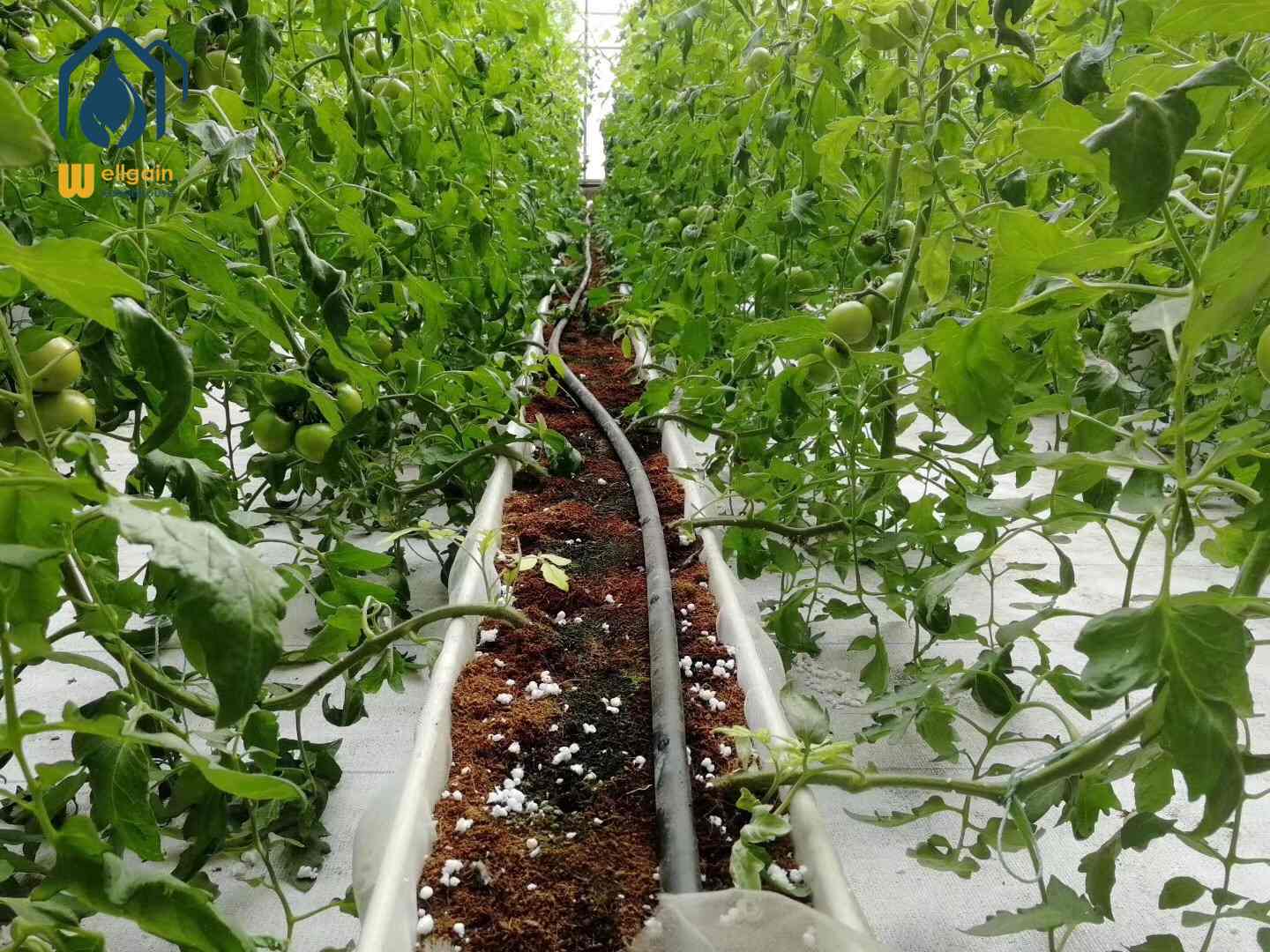
1. Core Components of the Coir Channel System
-
Recommended "H" or "V" shaped channels
-
Width: 25-30cm
-
Depth: 15-20cm
Coir Substrate:
-
Select coarse-structured coir with fiber length of 1-2cm
-
Bulk density: 0.06-0.08g/cm³
Drip Irrigation System:
-
Includes primary filtration unit
-
Pressure-compensating drip emitters
-
EC/pH monitoring modules
Drainage System:
-
Channel bottom designed with 1-2% slope
-
Equipped with collection troughs and return pipes
2. Unique Advantages of the Technical Combination
Optimized Root Environment:
-
Coir pore distribution:
-
Macropores (25%)
-
Mesopores (45%)
-
Micropores (30%)
-
-
Oxygen diffusion rate 3-5 times higher than soil
-
Root zone temperature fluctuation reduced by 50%
Precision Water-Fertilizer Management:
-
Irrigation response time reduced to 1/3 of traditional cultivation
-
Nutrient supply error controlled within ±5%
-
Enables zonal differentiated fertilization
Enhanced Production Performance:
-
Continuous harvesting period extended to 8-10 months
-
Premium fruit rate increased to over 85%
-
Water-fertilizer use efficiency improved by 40-60%
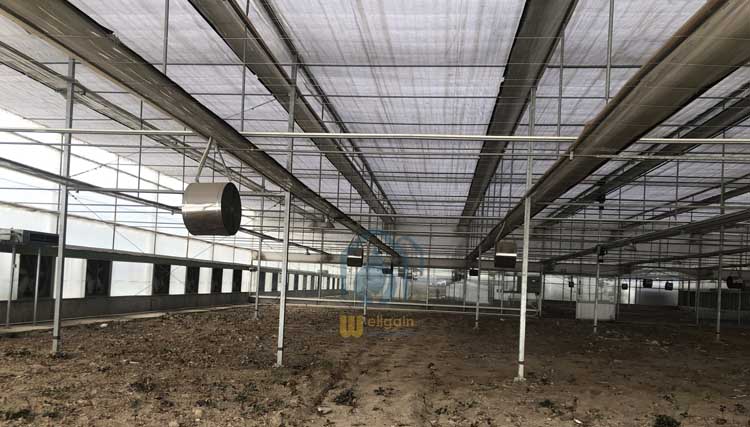
In fact, in the production of smart greenhouses, the lighting time is generally controlled according to the type of plants, and can also be adjusted by intermittent supplementary light or shading. By appropriately reducing the light intensity, prolonging the lighting time, increasing the proportion of scattered radiation, and alternating intermittent or weak light, the light utilization efficiency of plants can be greatly improved.
1. Photoperiod fill lamp
For crops that are sensitive to photoperiod in the smart greenhouse, when the dark time is too long and affects the growth and development of crops, artificial photoperiod should be increased. It is easier to adjust the light time than the light intensity. Artificial periodic supplementary light provides information for regulating crop growth and development, generally promotes flower bud differentiation, and regulates crop flowering. Therefore, the intensity of fill light is unnecessary, and the time and intensity of fill light depends on the type of plant.
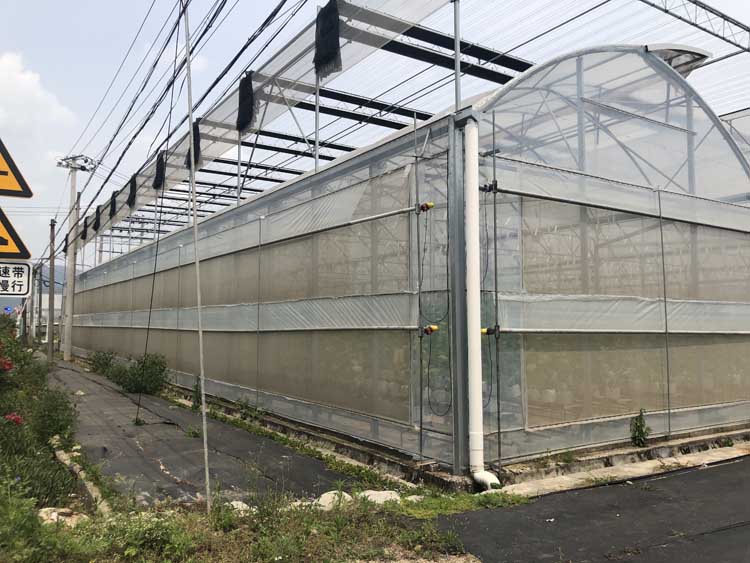
2. Photoperiod shading
The purpose of photoperiod shading is to prolong the yield of crops and ensure the demand of short-day plants in the smart greenhouse for continuous dark periods, thereby regulating flower bud differentiation. Generally, the top and periphery of crops are tightly covered with black cloth or black plastic film for greenhouse. During the shading period of the light cycle, ventilation should be strengthened to prevent damage to plants caused by the high temperature and high humidity environment.
By introducing the regulation of light time in the smart greenhouse, the regulation of time in the greenhouse plays an important role in the growth of crops. I hope you can master the knowledge of smart greenhouse.
Hydroponic vegetables refer to vegetables that are cultivated under the traditional soil cultivation form, in which most of the roots grow in the nutrient liquid layer and only provide water, nutrient and oxygen through the nutrient liquid. Hydroponic leaf vegetables have the characteristics of short growth cycle, clean product, good taste and good benefit. The varieties of hydroponic vegetables are mainly leaf vegetables, such as lettuce, green vegetables, cabbage, water cabbage, amaranth, chicory and so on. Preparation of nutrient solution is the key technology for normal growth of hydroponic vegetables.
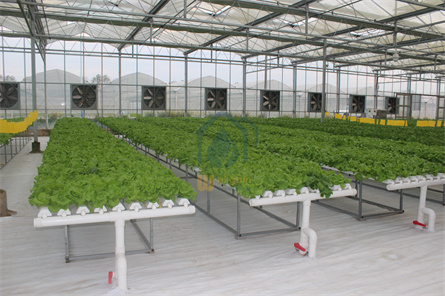
At present, the nutrient solution formula used in the production of leafy vegetables is 1122g calcium nitrate, 910g potassium nitrate, 272g potassium dihydrogen phosphate, 40g ammonium nitrate, 247g magnesium sulfate, 1.2g boron sulfate, 0.09g zinc sulfate, 4.2g iron chelate, 27.8g ferrous sulfate and 37.3g disodium ethylenediamine tetraacetic acid per 1t nutrient solution. Leaf vegetables are grown on substrate. Vegetable seedlings grow to the colonization stage, seedlings from the soil or soilless cultivation matrix, can be directly planted in the pipeline equipped with funnel filter, or through root treatment and then planted in the pipeline water, the specific treatment method:
1. Wash soil or other cultivated substrate with clean water to remove roots;
2. Cut off old or dead roots, dead skin and excess lateral roots;
3. Soak roots with hydroponic plant disinfectant for 15-20 minutes to sterilize and disinfect. 4. Rinse with water again several times before colonizing.
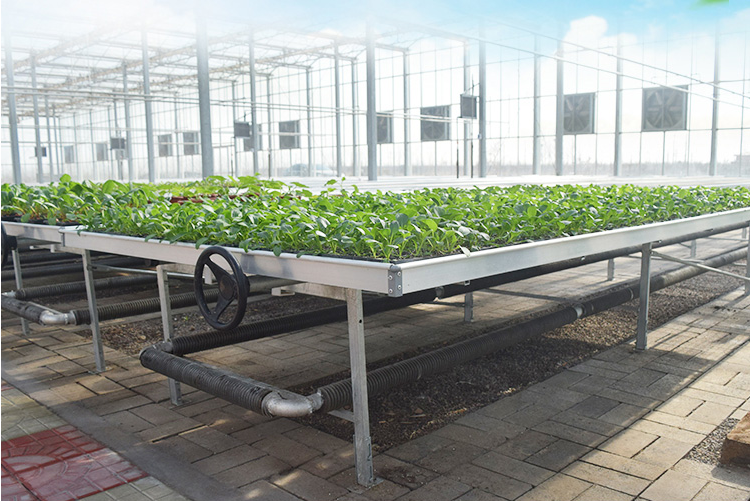
The production management
1.Temperature control Hydroponics leaf vegetable root growth environment is nutrient solution, the temperature of nutrient solution directly affects the speed of leaf vegetable growth, the appropriate nutrient solution water temperature is 15-18 ℃, the temperature is 18-23 ℃. In summer, with high temperature and strong light, leafy vegetables grow fast, have low nutrient content and poor quality. Moreover, the stems and leaves of leafy vegetables contain more moisture and are crisp and tender. Strong light or water vapor condensation droplets are easy to burn the leaves, causing spots on the leaves and reducing the commercialization. Therefore, in the production, fan wet curtain cooling system and shading net are used to achieve the purpose of ventilation and cooling, control the growth of leafy vegetables and ensure the quality. However, it should be noted that the indoor light time and intensity must meet the requirements of the growth of leafy vegetables. In the morning and evening, the shade net should be pulled up to increase the weak light time to increase the color depth and thickness of the leaves. In winter, the temperature of the nutrient solution is preheated to reach the temperature required for the growth of leafy vegetables.
2.Concentration regulation winter temperature is low, the growth of leafy vegetables is slow, in order to improve the growth rate, the concentration of nutrient solution can be appropriately high, but not too much nitrogen, so as not to cause the taste of leafy vegetables, reduce the quality. Leafy vegetables grow faster in summer, and nutrient solution concentration is slightly lower than that in winter. The growth rate of leafy vegetables can be controlled by increasing the number of cycles to improve their quality.
3.Timely liquid supply The time and times of nutrient solution supply mainly depend on the cultivation form, vegetable growth state and environmental conditions. In the cultivation process should be timely liquid supply to ensure adequate nutrient supply. The time of liquid supply is generally chosen in the daytime, and no or little liquid supply at night. The number of liquid supply in sunny days is more, and the number of liquid supply in rainy days is less. More when the temperature is high and the light is strong, less vice versa. Under normal circumstances, 2-4 times a day, each time hold in 30 minutes.
4. Replacement of nutrient solution The nutrient solution should be replaced timely after a period of use. Because nutrient solution in the process of use will gradually accumulate too much material hindering plant growth, nutrient imbalance, a large number of bacteria, resulting in root growth arrest, and even lead to plant death. To grow the vegetable with shorter cycle commonly, each crop changes nutrient fluid. At the same time, NFT Gutters and plastic pipes should be cleaned and disinfected once a year.
The experiment was carried out on hydroponic lettuce seedlings by using three seedling substrates, namely phenolic foam, sponge and mixed substrate, to explore the influence of different substrates on the seedling emergence and biological yield of lettuce seedlings.。
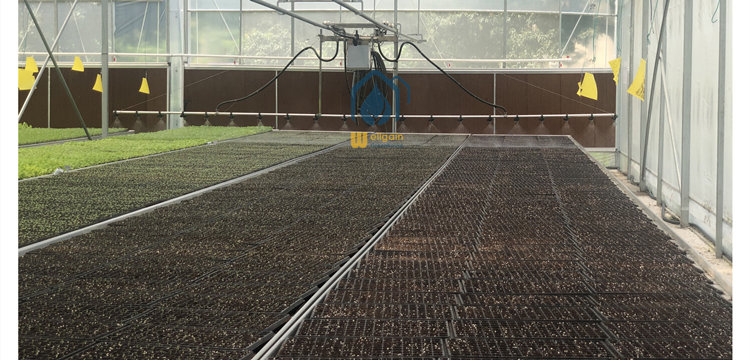
The results showed that the effects of different substrates were significantly different:
At the seedling stage,
The emergence rate of lettuce based on phenolic foam (T1) was the highest, reaching 98.13%.
The sponges (T2) were followed by 97.5%,
The lowest was mixed matrix (T3),
The speed of germination and seedling growth was in order of T2> T1> T3,
Leaf length and overground fresh weight were T1> from large to small. T2> T3;
The above ground fresh weight of lettuce was T1> after pipeline hydroponics. T2> The leaves of T3 and T1 are short and thick, and have good commercial properties.
Based on the comprehensive analysis of seedling cost, operation mode, lettuce environment and experimental results, it was found that phenolic foam substrate was more suitable for growing lettuce seedlings in subtropical hydroponic culture.
The Advantages of Film Greenhouses for Modern Agriculture
Introduction
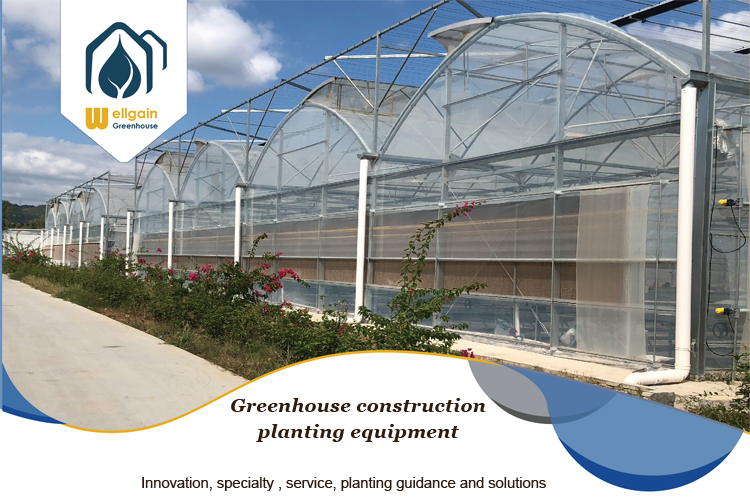
Film greenhouses, also known as polytunnels or hoop houses, are revolutionizing modern agriculture by providing cost-effective and versatile solutions for crop cultivation. These structures, covered with polyethylene film, offer a controlled environment that protects plants from harsh weather, pests, and diseases while optimizing growth conditions. As the demand for sustainable and efficient farming practices grows, film greenhouses are becoming an essential tool for farmers worldwide.
What is a Film Greenhouse?
A film greenhouse is a semi-circular or arched structure made of metal or PVC frames covered with UV-resistant polyethylene film. The film allows sunlight to penetrate while retaining heat, creating an ideal microclimate for plant growth. Film greenhouses are widely used for growing vegetables, fruits, flowers, and seedlings.
Key Benefits of Film Greenhouses
-
Cost-Effective: Film greenhouses are significantly cheaper to build and maintain compared to glass or polycarbonate greenhouses, making them accessible to small-scale farmers.
-
Light Transmission: Polyethylene film provides excellent light diffusion, ensuring uniform light distribution for optimal plant growth.
-
Durability: Modern UV-resistant films can last 3-5 years, withstanding moderate weather conditions like wind, rain, and light snow.
-
Versatility: Film greenhouses can be customized in size and shape to suit various crops and farming needs.
-
Energy Efficiency: The film retains heat effectively, reducing the need for additional heating in colder climates.
Applications of Film Greenhouses
-
Small-Scale Farming: Ideal for growing high-value crops like tomatoes, cucumbers, and strawberries.
-
Nurseries: Used for seedling production and plant propagation.
-
Seasonal Crop Protection: Protects crops from extreme weather and pests.
-
Commercial Agriculture: Enables year-round production and higher yields.
Challenges and Solutions
While film greenhouses offer many advantages, they also face challenges such as limited durability of the film and vulnerability to strong winds or heavy snow. However, advancements in film technology, such as multi-layer films and reinforced structures, are addressing these issues and improving the longevity and performance of film greenhouses.
Conclusion
Film greenhouses are a game-changer for modern agriculture, offering a cost-effective and sustainable way to grow crops in controlled environments. By protecting plants from external threats and optimizing growth conditions, film greenhouses are helping farmers increase productivity and meet the growing demand for food worldwide.
The Art of Growing Orchids in a Greenhouse: A Guide for Enthusiasts
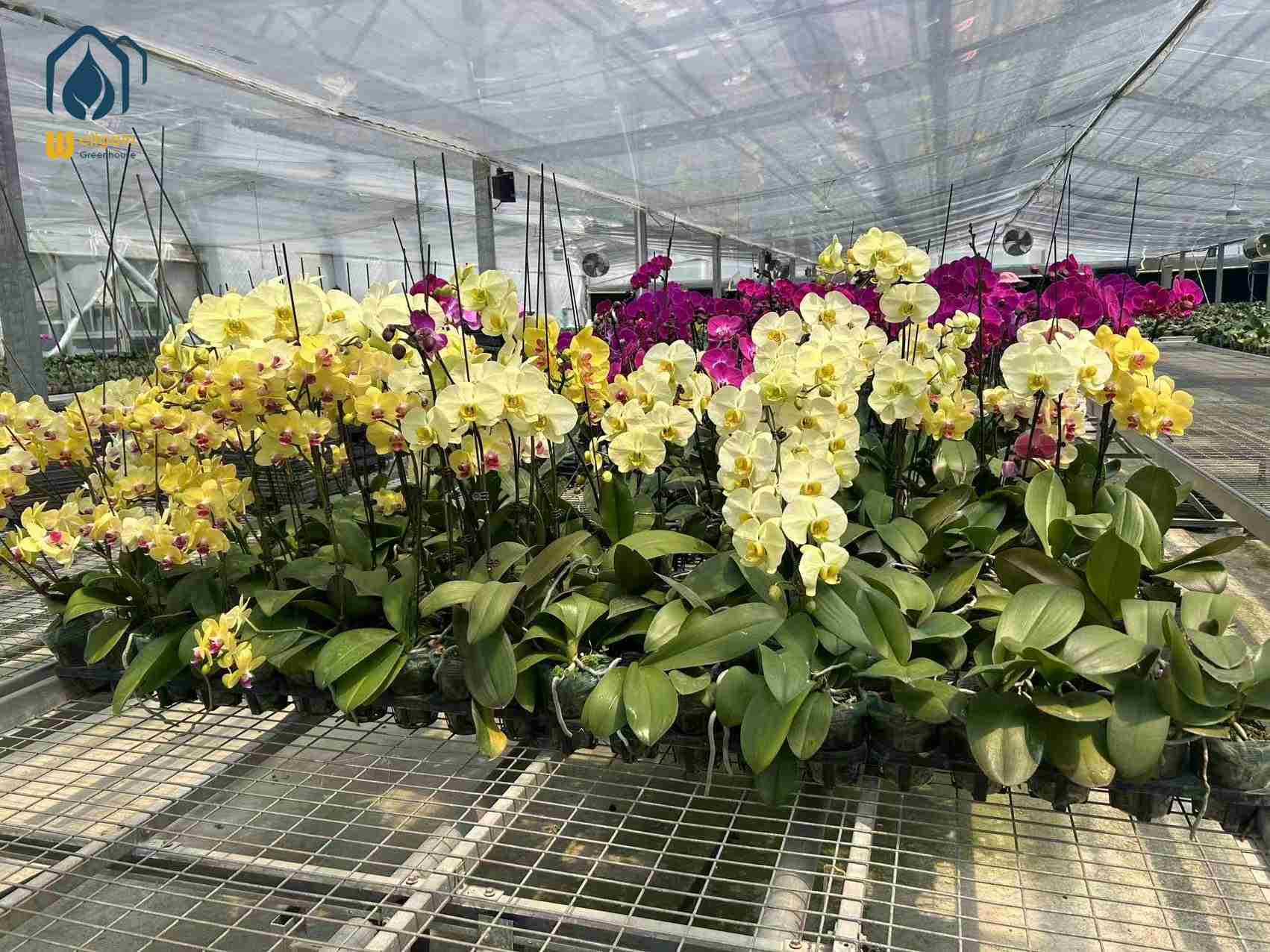
Orchids are among the most exquisite and rewarding plants to grow, but they can also be quite demanding. A well-designed greenhouse provides the perfect controlled environment to cultivate these delicate beauties. Whether you're a hobbyist or a commercial grower, here’s how to optimize your orchid greenhouse for success.
Why Grow Orchids in a Greenhouse?
Greenhouses offer:
-
Stable temperature & humidity – Orchids thrive in consistent conditions (typically 65-80°F / 18-27°C and 50-70% humidity).
-
Controlled light – Many orchids prefer bright, indirect light, which can be regulated with shade nets (e.g., 50% shading rate).
-
Protection from pests & harsh weather – A greenhouse minimizes exposure to extreme temperatures, wind, and insects.
Key Greenhouse Setup Tips
-
Light Management
-
Use shade cloths (e.g., round wire shade net with 30-70% shading rate) to diffuse intense sunlight.
-
Adjust shading seasonally—orchids like Phalaenopsis need less light than Cattleyas.
-
-
Ventilation & Airflow
-
Install exhaust fans or vents to prevent stagnant air, which can lead to fungal diseases.
-
Gentle air movement mimics their natural habitat.
-
-
Humidity Control
-
Maintain 50-70% humidity with misting systems or humidity trays.
-
Avoid wetting leaves excessively to prevent rot.
-
-
Watering & Fertilization
-
Water in the morning to allow drying before nightfall.
-
Use a balanced orchid fertilizer (20-20-20) diluted to half strength.
-
-
Pest & Disease Prevention
-
Inspect regularly for spider mites, aphids, and mealybugs.
-
Isolate infected plants and treat with neem oil or insecticidal soap.
-
Recommended Orchids for Greenhouse Growing
-
Phalaenopsis (Moth Orchids) – Ideal for beginners, prefer warm temps.
-
Cattleya – Need brighter light and slight drying between waterings.
-
Dendrobium – Tolerate cooler nights and variable humidity.
Final Thoughts
A greenhouse allows you to fine-tune conditions to match your orchids’ needs perfectly. Start with hardy varieties, monitor environmental factors closely, and soon you’ll be rewarded with stunning, healthy blooms year-round.
Happy growing!
The Complete Guide to Blackout Greenhouses: Revolutionizing Controlled Environment Agriculture
In the world of modern agriculture, blackout greenhouses (also known as complete light-deprivation greenhouses) are transforming how we grow plants. These specialized structures allow growers to manipulate light cycles with precision—blocking 100% of external light to create optimal conditions for photoperiod-sensitive crops like cannabis, chrysanthemums, and poinsettias.
Whether you're a commercial grower or a researcher, understanding blackout greenhouse technology can unlock higher yields, year-round production, and unparalleled climate control.
Benefits of Blackout Greenhouses
-
Total Photoperiod Control
-
Simulate short-day/long-day conditions anytime, enabling multiple harvests per year.
-
Critical for crops requiring specific dark periods (e.g., cannabis needs 12 hours of darkness to flower).
-
-
Energy Efficiency
-
Reduce reliance on artificial lighting by leveraging natural daylight when possible.
-
Blackout insulation can also stabilize temperatures, lowering HVAC costs.
-
-
Pest & Disease Reduction
-
Sealed environments minimize exposure to outdoor pathogens and insects.
-
-
Climate Resilience
-
Grow tropical plants in cold climates (or vice versa) by decoupling from external weather.
-
Blackout greenhouses represent the pinnacle of controlled environment agriculture (CEA), offering unmatched flexibility for growers. By investing in proper design and automation, you can harness the power of darkness to boost productivity and profitability.
Ready to go dark? Consult with greenhouse engineers to tailor a system for your crops!
The Future of Farming: How Greenhouses Are Revolutionizing Agriculture
In a world facing climate change, population growth, and shrinking arable land, greenhouses have emerged as a sustainable and efficient solution for modern agriculture. These controlled environments allow farmers to grow crops year-round, regardless of external weather conditions, ensuring food security and higher yields.
Why Choose Greenhouses?
-
Year-Round Production
Unlike traditional farming, greenhouses provide a stable climate, enabling cultivation in all seasons. This means fresh vegetables, fruits, and herbs even in winter or extreme weather. -
Higher Yields with Fewer Resources
Greenhouses optimize water usage through advanced irrigation systems like hydroponics and reduce pesticide needs by protecting crops from pests. This results in more produce with less waste. -
Protection Against Climate Extremes
Droughts, storms, and unpredictable weather can devastate open-field crops. Greenhouses act as a shield, ensuring consistent growth without the risks of climate volatility. -
Sustainable & Eco-Friendly
By using renewable energy (such as solar-powered systems) and recycling water, modern greenhouses minimize environmental impact while maximizing efficiency.
Applications of Greenhouses
-
Commercial Farming: Boost profitability with high-quality, off-season produce.
-
Urban Agriculture: Grow fresh food in cities, reducing transport emissions.
-
Research & Education: Ideal for experimenting with new plant varieties and sustainable techniques.
Join the Greenhouse Movement!
Whether you're a farmer, entrepreneur, or eco-conscious individual, investing in greenhouse technology is a step toward a greener, more food-secure future.
Contact us today to learn how you can start your greenhouse project!

- Buddha Jump Over the Wall1
- Canned Abalone2
- Canned Turtle Soup1
- Edible Bird's Nest2
- Frozen Foods1
- Frozen Seafood8
- Jelly/Pudding Applications1
- Meat Product Applications2
- Others Applications5
- Plant-based meat Product Applications1
- SURIMI2
- Soft Candy1
- Soft Candy Applications4
- bottle1
- can end2
- packaging film2
- tableware3