As the growing area of greenhouses is larger and larger, it means that the number of greenhouses should increase. If the service life of the greenhouse is long enough, the quality of the main steel pipe must be better. Today, I will introduce to you what kinds of greenhouse steel pipes there are.
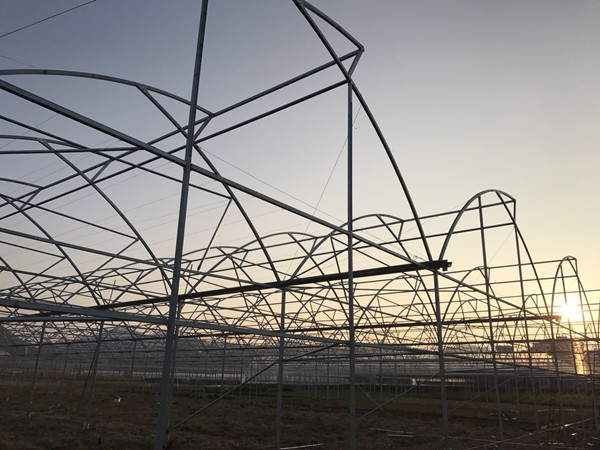
1. Welded pipe: It is made of steel plate or strip steel as raw materials, first rolled and formed, and then welded. Its main advantages are:
The production process is relatively simple, the production efficiency is high, and the varieties and specifications are diverse. However, its service life is not as good as galvanized pipe.
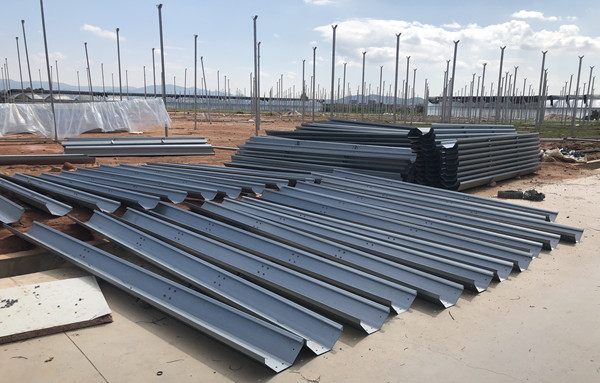
2, hot dip galvanized steel pipe: the hot dip galvanized steel pipe is carried out in the hot dip plating tank, and the formed coating is more uniform, but also strong adhesion, so it can be used for a long time. Moreover, its corrosion resistance is also very good.
3, galvanized steel pipe: it will be adjusted to get, its price is lower than that of hot-dip galvanized steel pipe, but its corrosion resistance is not as good.
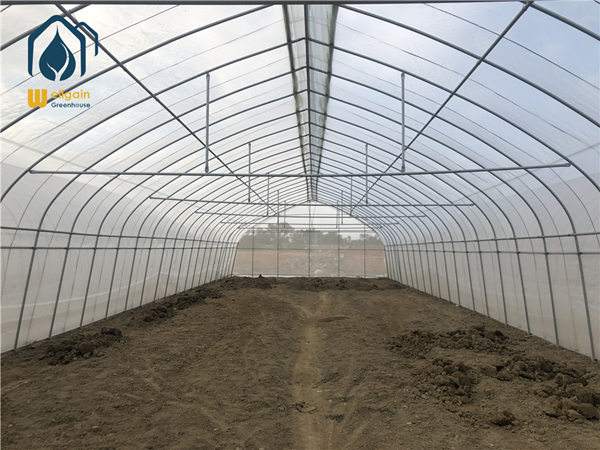
The difference between hot-dip galvanized steel pipe and galvanized strip steel pipe is as follows:
Difference one: its color, service life, performance and price are completely different, can not be confused.
Difference two: there will be some defects on the surface of hot-dip galvanized steel pipe, such as snowflakes on the surface, zinc nodules on the port, and galvanized steel pipe without
NFT is the abbreviation of Nutrient Film Technique, which is one of the important hydroponic technologies capable of commercial production.
The principle behind the NFT hydroponic system is simple. It can maintain a thin water film in the NFT planting tank throughout the life cycle of the crop, and the plant roots absorb the nutrient solution flowing in the tank to obtain the required nutrients and water. In addition, since part of the root system of the plant is immersed in the nutrient solution and part of the root system is exposed to the air, the contradiction between water absorption and oxygen absorption by the root system is simply and effectively solved.
The advantages of NFT flat cultivation hydroponic system include:
1. Maintenance is more convenient because there are fewer components in the system.
2. Compared with the A-frame hydroponic system, the NFT flat cultivation system has a simpler structure and is easier to install.
3. Due to the lighter weight of the entire flat cultivation system, larger leaf vegetable crops can be planted.
4. Obtain more uniform and better lighting conditions for plant growth.
5. It is easy to realize the automatic management of the production process.
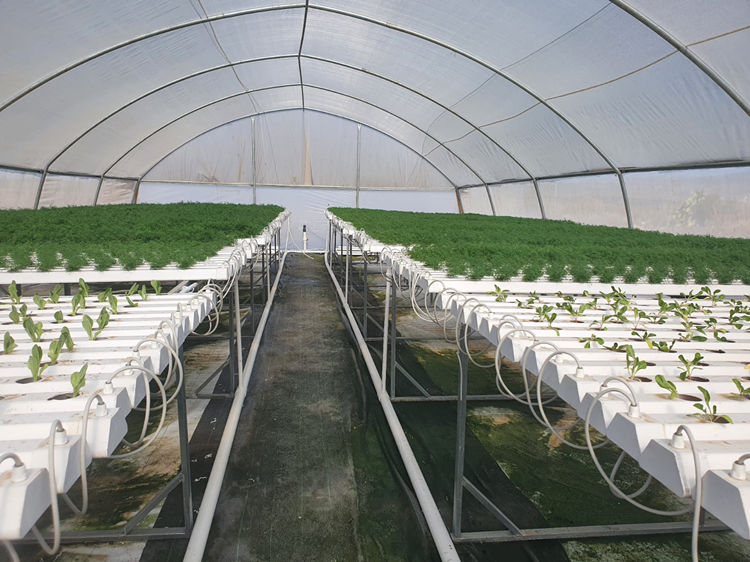
Disadvantages of NFT flat cultivation hydroponic system
1. The space utilization rate is low.
2. The unit density is slightly lower than that of the A-frame hydroponic system.
3. It is difficult to harvest, especially the crops in the middle trough.
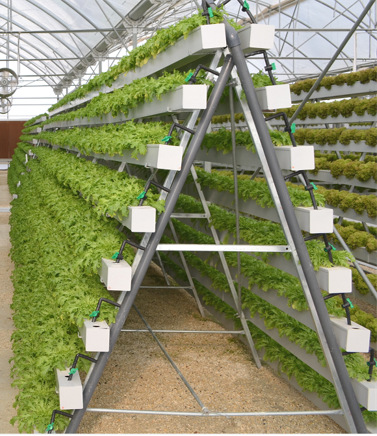
Advantages of A-Frame Hydroponics System
1. The layout will be more compact and the space utilization rate will be higher, because the NFT planting slots can be stacked layer by layer.
2. The yield is higher, usually slightly higher than the NFT flat cultivation hydroponic system.
3. Beautiful appearance, especially suitable for leisure and sightseeing agriculture.
Disadvantages of A-Frame Hydroponic Systems
1. A higher power pump is required to ensure that the nutrient solution can reach the same level in each NFT tank.
2. It is difficult to set planting technical parameters.
3. Uneven lighting conditions, especially for the bottom plants, may require the use of LED fill lights.
4. The types of crops that can be planted are limited.
Generally speaking, the NFT flat cultivation hydroponic system is suitable for crops with large plant size or high plant height, such as lettuce, spinach and basil. The A-frame hydroponic system is suitable for plants with smaller space, faster yield, short root system and short plants, because they limit the maximum growth of plants, such as bitter chrysanthemum, lettuce, rape, lettuce etc.
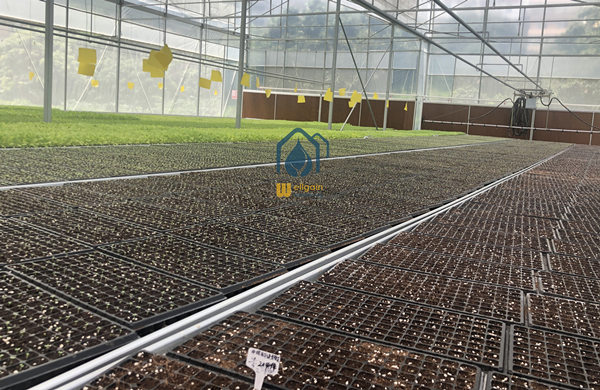
The ebb and flow seedbed is composed of seedbed tray, rolling shaft, bracket, seedbed frame, hand wheel, horizontal support and inclined rod. The standard height of the seedbed is generally 0.7 or 0.75m, which can be fine-tuned up and down; the standard width is 1.7m, and the length can also be determined according to the width of the greenhouse. The length can be customized according to user requirements, generally 20-30m, but the length of the seedbed should not exceed 40m, so as not to affect the shaking effect. The size of the seedbed tray is generally 1.7*4.5 (4 or 5) meters, and other specifications can also be designed according to needs. The seedbed tray is made of ABS material, which has high anti-corrosion performance, good load-bearing capacity and long service life.
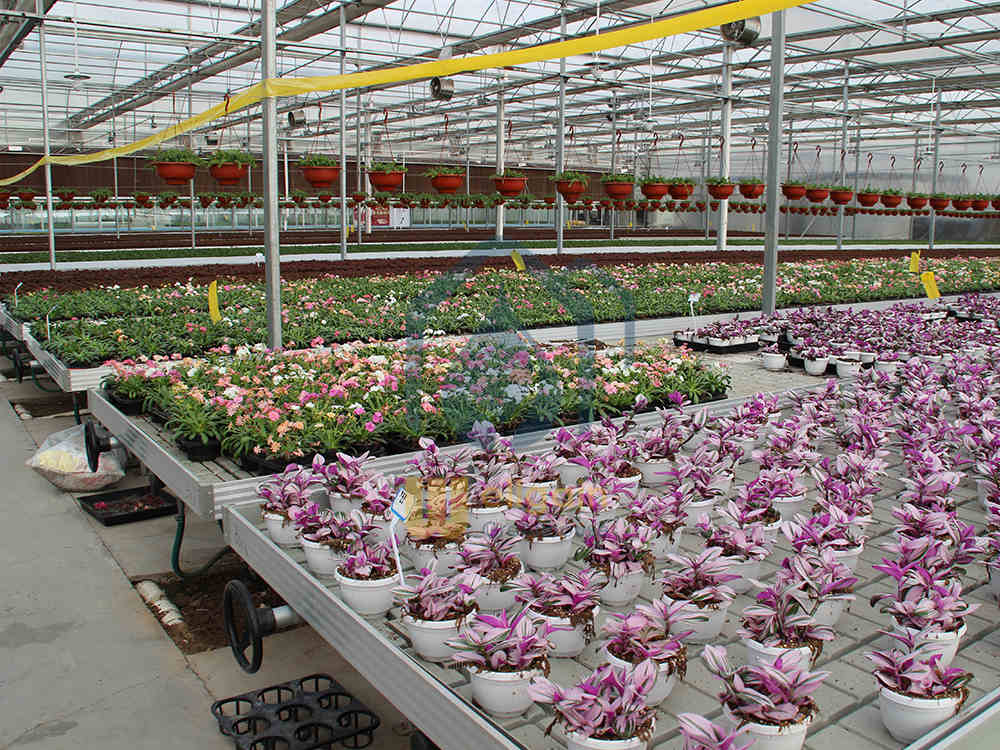
The advantages of Ebb and flow table irrigation are high irrigation uniformity, low labor intensity, large greenhouse space utilization, crop leaves are not easily damped, leaf diseases rarely occur, and irrigation water can be fully recycled to reduce water waste.
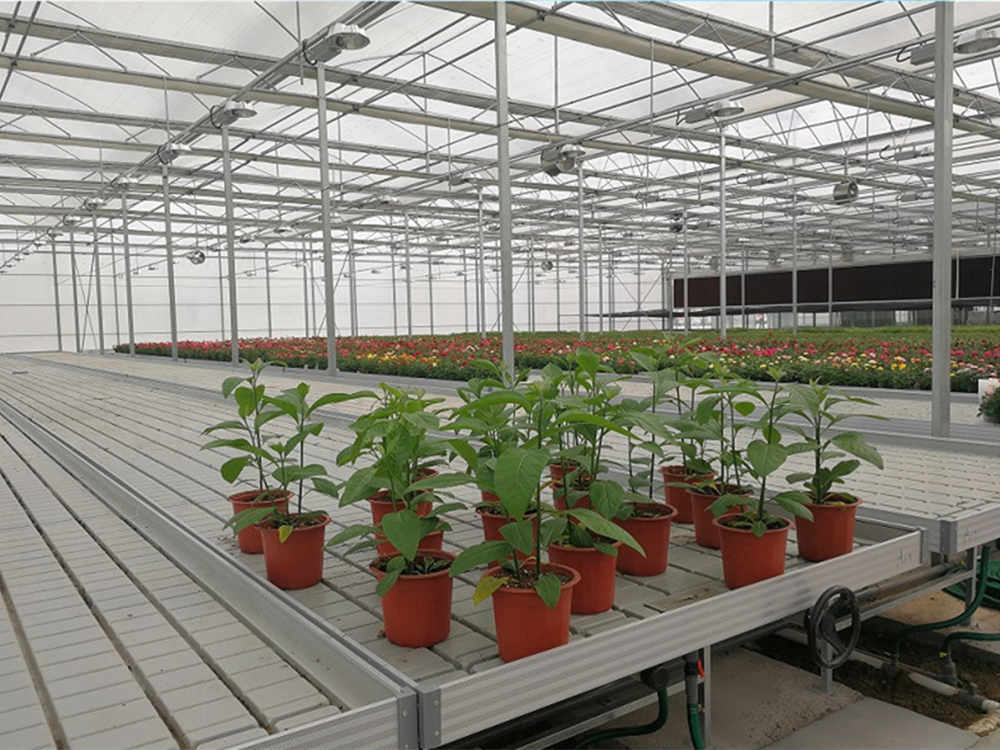
Ebb and flow irrigation seedbed: ebb and flow phenomenon is a natural phenomenon in coastal areas. It refers to the periodic movement of seawater under the action of tidal forces of celestial bodies (mainly the moon and the sun). It is customary to call the vertical fluctuation of the sea surface as tide.
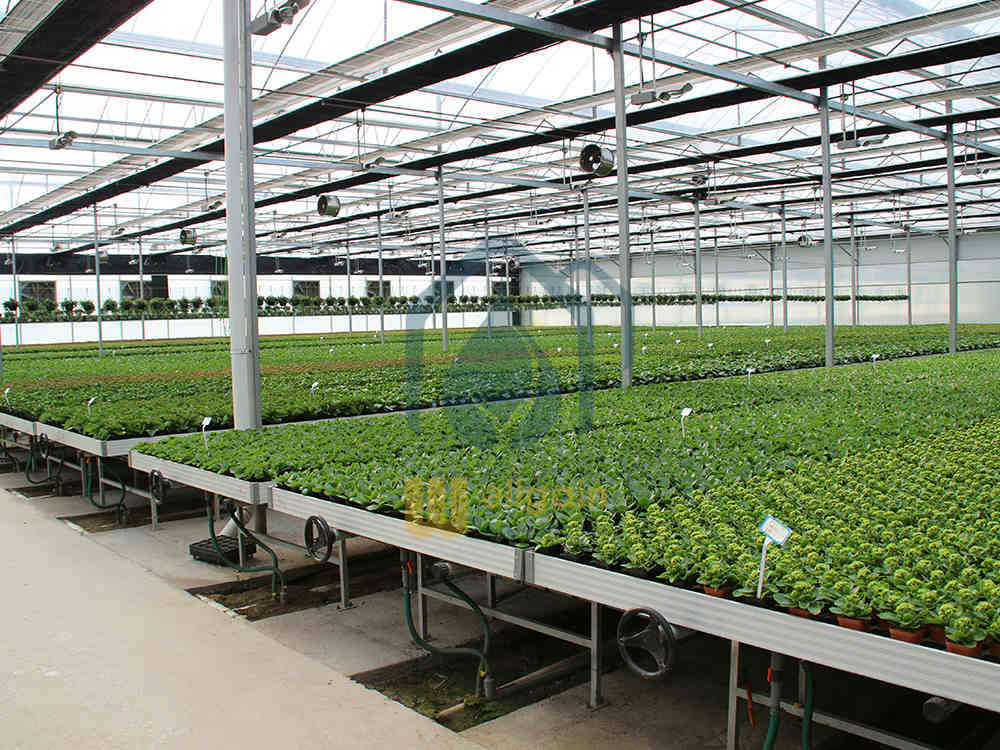
the technology of growing seedling
Sowing was carried out in the greenhouse. Coconut bran matrix was placed in a 72-well hole dish, and then placed on a tidal Greenhouse seedbed. Nutrient solution (EC: 1.6 mS/cm, pH: 7.4) was poured to saturate the substrate with water absorption. The seeded hole plates are placed in a centralized manner according to the varieties, and the varieties and sowing date are marked. After that, spray water on the surface of the seeded hole plates with a watering can until the seed coating is soaked. Finally, cover the holes with non-woven cloth for moisture, and remove the holes after the seeds bud. Check the moisture condition of the substrate every day, and water in time to prevent drying of the substrate. The temperature of the seedling area is 22~24℃ during the day, and it is heated according to the outside weather at night, and the curtain insulation is started at the same time. The temperature at night is kept at 12~14℃, and the seedlings can germinate in 3 days.
Lettuce transplanting
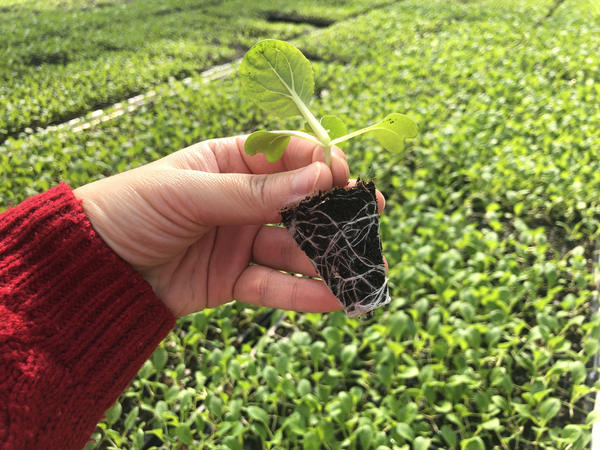
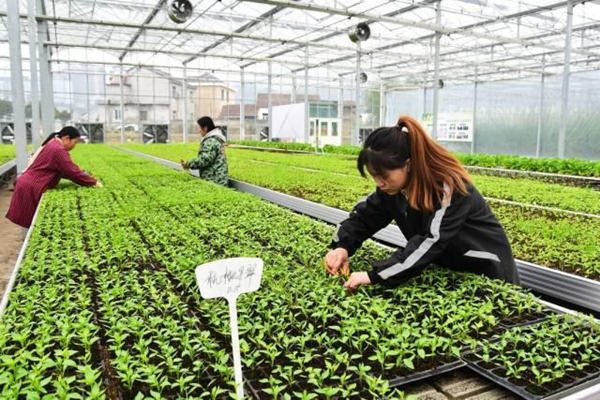
When the seedlings grow trifoliate, they will reach the colonization standard and can be transferred to the planting area in batches. Gently take out the vegetable seedlings in the substrate tray and place them upright in the cultivation holes. After each variety is transplanted, mark the variety name, sowing date and transplanting date. After the transplanting is completed, check again whether the cultivation tank is aligned with the water outlet.
Environment and water and fertilizer management after transplanting
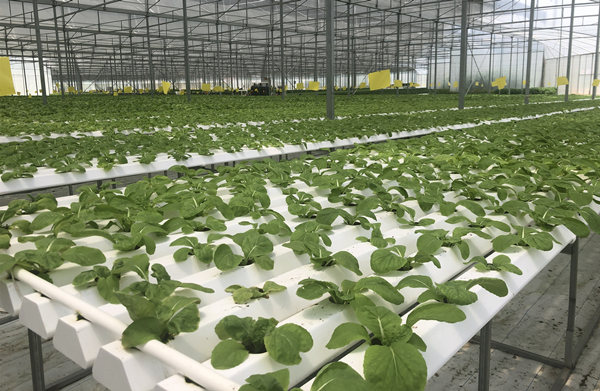
After being transplanted to NFT Pipes Hydroponics , the temperature was controlled at 25℃ during the day and decreased to about 12℃ at night. After colonization, NFT system was used for irrigation of lettuce, which was set to irrigate once in 25~40 min and once in 3~5 min. Nutrient solution configuration is the core of NFT cultivation technology. Nutrient solution formulation and control directly affect crop growth, yield and quality. Can make lettuce professional formula, or general leaf vegetable special fertilizer, A fertilizer and B fertilizer separately configured, nutrient solution preparation water for clean and pollution-free RO pure water, configuration needs to adjust the EC at about 1.5 mS/m, pH at about 7.5.
recovery
In summer, the temperature is getting higher and higher, especially for saw tooth type greenhouse, so it is necessary to carry out effective air release to ensure the smooth "inhalation" of the greenhouse, and release the air layer by layer. When the greenhouse is closed for 1 hour or the temperature of the greenhouse reaches 20 degrees, a little breeze needs to be released, and the air outlet is as wide as 5cm to improve the photosynthesis of crops and discharge water or harmful substances from the body. When the temperature in the greenhouse rises to the high temperature required by the crops, the secondary air is released to slowly reduce the temperature to a range suitable for the growth and development of vegetables.
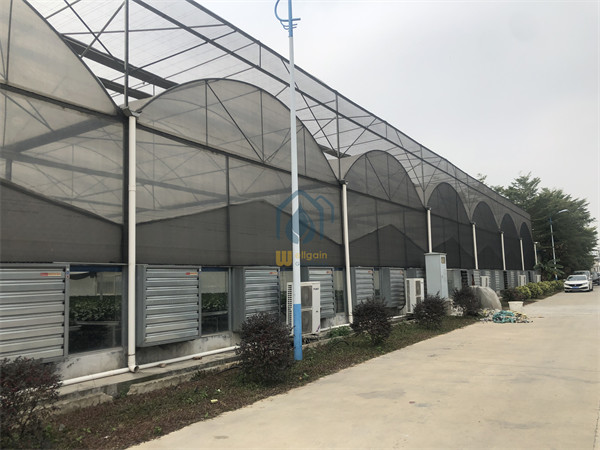
When there is no wind or a slight northeasterly wind (or southeasterly wind), the temperature at the western end of the greenhouse is generally 2-3 degrees higher than that in the eastern half, and when the wind is strong, the temperature at the eastern end is 2 degrees higher than that at the western end. When there is northwest or southwest wind, the temperature difference between the two sides of the item will be more than 3 degrees, and the greater the wind, the greater the temperature difference. Due to the different site conditions, the fresh air should be managed in sections.
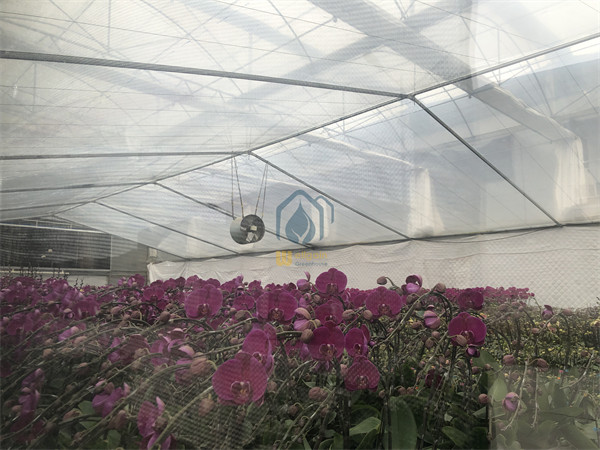
The thermometer setting should be valid. The key to venting is according to the loading temperature in the thermometer. Whether its accuracy is directly related to whether the hydroponics vegetables are in a natural environment suitable for growth and development. Therefore, it is recommended to set three thermometers symmetrically on the east side of the arch shed, then take the average value to reduce the error, and place the vegetable sprout eye 10 cm above the thermometer. The humidity of the greenhouse environment increases strongly after watering and needs to be dehumidified immediately. Water at noon of the day, close the air outlet moderately, and open the air outlet in the morning to increase natural ventilation. Actual operation for 2-3 days can quickly reduce the environmental humidity of the greenhouse and reduce diseases.
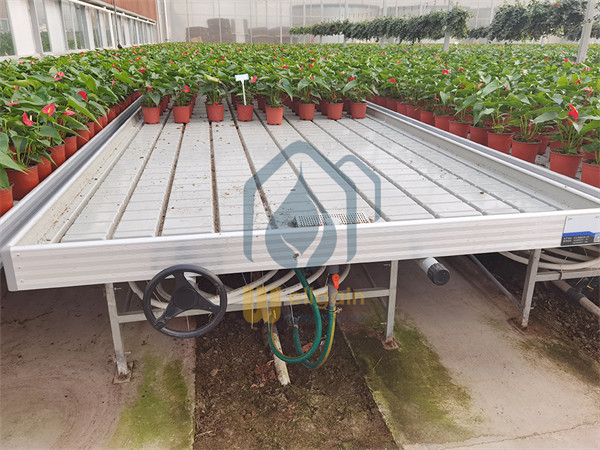
Before seedling, put the seeds into warm water at about 50℃ to soak for a period of time. After the seeds are white, they can be evenly spread into the soil. After that, the seeds can be seeded into the soil dish one by one, and watered properly to protect moisture.
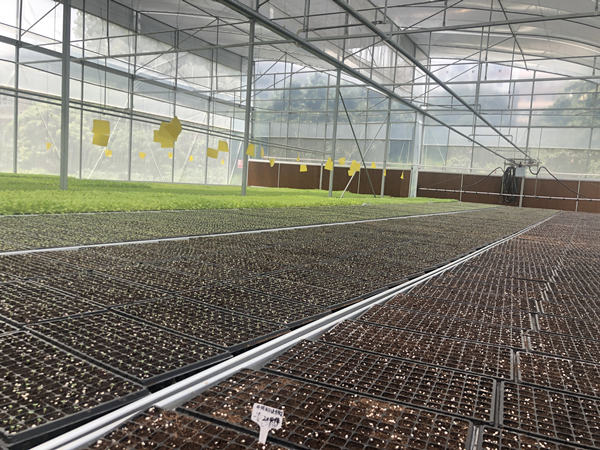
Seedling tray method of seedling raising
The substrate should be prepared first when using the seedling tray. Plant ash, perlite and vermiculite can be mixed in a ratio of 2:1:1 to make cultivation substrate. Then the soil is mixed with insecticides and fungicides, mixed evenly with a layer of plastic film, and then placed in the sun for 3 to 6 hours.
Then the seeds need to be accelerated germination treatment, the seeds need to be soaked in warm water about 50℃ for a period of time, when the water temperature drops to 30℃ and then soak for 12 hours, such as the seeds white and fully absorb water, and then the seeds can be spread to the soil equipped with cultivation matrix, so that the vegetable seeds can quickly emerge.
After the seedling plate is cleaned, the prepared matrix can be loaded into the seedling plate, so that the height of the substrate and the height of the seedling plate is consistent, and finally the seed is placed into the plate according to the seeding method of a hole and a grain, and then the soil is covered with a layer of vermiculite.
After sowing, place the tray into Hydroponic Rolling Bench in the greenhouse. Water every other week to ensure that the soil is slightly moist. In addition, when watering the seeds, it is recommended to use nutrient-rich and pollution-free spring water or well water. Tap water can also be used after 1 to 2 days. And when the room temperature is higher than 30℃, it is necessary to spray water mist around the leaves regularly to cool down.
The most challenging step is arguably choosing to clone the mother. It is the cornerstone of the whole process, so don't worry, choose the first healthy plant you see!
Analyze your plants and choose a plant that is tough, fast-growing, high-yielding, healthy buds, and large roots.
Before making the first cut, make sure your plants are in a vegetative state. Although you can plant the plant while it is flowering, it is difficult to take root. This increases the mortality rate. If you are trying to clone a game for the first time, you may not have enough knowledge or rich growth experience to decide your best choice.
In this case, just choose a female in a vegetative state, and it looks healthy. We also recommend cloning plants from ordinary seeds instead of using feminized seeds. Remember, cannabis plants produce feminized seeds only when they are stressed. If you pick plants from these seeds and stress them again, they may become hermaphrodite.
The plants you choose must be at least two months old. Your best chance of success is to choose a plant that has been in a vegetative state for three months. By exercising this degree of patience, you can obtain multiple clones from a single plant. Make sure that the plants you choose absorb about 10% less nitrogen than usual in the two weeks before pruning. This strategy increases the chances of successfully taking root.
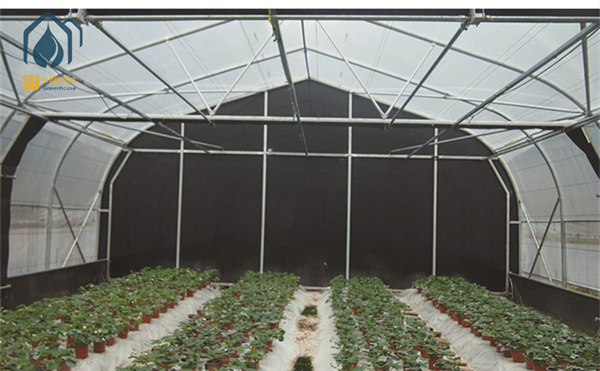
When using greenhouse equipment to grow cannabis, china blackout greenhouse factory usually have a supplementary light system to supplement the lack of sunlight.
In order to avoid light pollution, we use greenhouse light deprivation systems, which is used when the fill light is turned on.
Of course, we will also make heating, cooling, CO2 and other equipment in marijuana blackout greenhouse to create a climate suitable for cannabis cultivation.
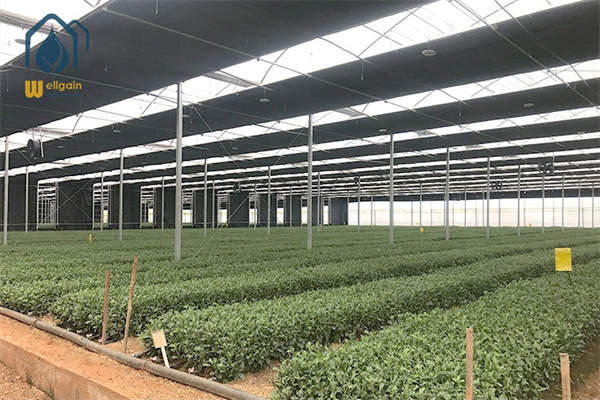
Hydroponic vegetables refer to vegetables that are cultivated under the traditional soil cultivation form, in which most of the roots grow in the nutrient liquid layer and only provide water, nutrient and oxygen through the nutrient liquid. Hydroponic leaf vegetables have the characteristics of short growth cycle, clean product, good taste and good benefit. The varieties of hydroponic vegetables are mainly leaf vegetables, such as lettuce, green vegetables, cabbage, water cabbage, amaranth, chicory and so on. Preparation of nutrient solution is the key technology for normal growth of hydroponic vegetables.
At present, the nutrient solution formula used in the production of leafy vegetables is 1122g calcium nitrate, 910g potassium nitrate, 272g potassium dihydrogen phosphate, 40g ammonium nitrate, 247g magnesium sulfate, 1.2g boron sulfate, 0.09g zinc sulfate, 4.2g iron chelate, 27.8g ferrous sulfate and 37.3g disodium ethylenediamine tetraacetic acid per 1t nutrient solution. Leaf vegetables are grown on substrate. Vegetable seedlings grow to the colonization stage, seedlings from the soil or soilless cultivation matrix, can be directly planted in the pipeline equipped with funnel filter, or through root treatment and then planted in the pipeline water, the specific treatment method:
3. Soak roots with hydroponic plant disinfectant for 15-20 minutes to sterilize and disinfect. 4. Rinse with water again several times before colonizing.
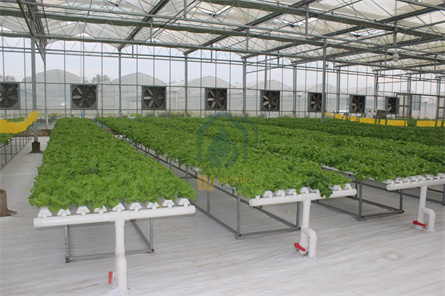
The production management
1.Temperature control Hydroponics leaf vegetable root growth environment is nutrient solution, the temperature of nutrient solution directly affects the speed of leaf vegetable growth, the appropriate nutrient solution water temperature is 15-18 ℃, the temperature is 18-23 ℃. In summer, with high temperature and strong light, leafy vegetables grow fast, have low nutrient content and poor quality. Moreover, the stems and leaves of leafy vegetables contain more moisture and are crisp and tender. Strong light or water vapor condensation droplets are easy to burn the leaves, causing spots on the leaves and reducing the commercialization. Therefore, in the production, fan wet curtain cooling system and shading net are used to achieve the purpose of ventilation and cooling, control the growth of leafy vegetables and ensure the quality. However, it should be noted that the indoor light time and intensity must meet the requirements of the growth of leafy vegetables. In the morning and evening, the shade net should be pulled up to increase the weak light time to increase the color depth and thickness of the leaves. In winter, the temperature of the nutrient solution is preheated to reach the temperature required for the growth of leafy vegetables.
2.Concentration regulation winter temperature is low, the growth of leafy vegetables is slow, in order to improve the growth rate, the concentration of nutrient solution can be appropriately high, but not too much nitrogen, so as not to cause the taste of leafy vegetables, reduce the quality. Leafy vegetables grow faster in summer, and nutrient solution concentration is slightly lower than that in winter. The growth rate of leafy vegetables can be controlled by increasing the number of cycles to improve their quality.
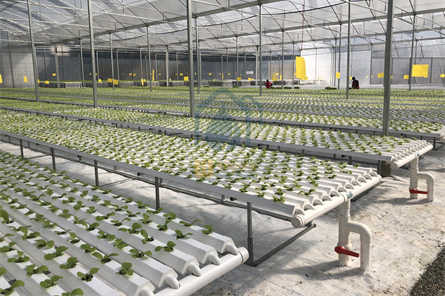
3.Timely liquid supply The time and times of nutrient solution supply mainly depend on the cultivation form, vegetable growth state and environmental conditions. In the cultivation process should be timely liquid supply to ensure adequate nutrient supply. The time of liquid supply is generally chosen in the daytime, and no or little liquid supply at night. The number of liquid supply in sunny days is more, and the number of liquid supply in rainy days is less. More when the temperature is high and the light is strong, less vice versa. Under normal circumstances, 2-4 times a day, each time hold in 30 minutes.
As the optimum temperature for most crops is usually below 30 degrees, the internal temperature of agricultural plastic greenhouse for tropical crops should not exceed 35 degrees, and that for hardy or shade-loving crops should not exceed 25 degrees. But for most of the country's low sea wave areas after May the temperature will be more than thirty degrees, intelligent greenhouse greenhouse without the use of shading and cooling equipment, the temperature will be as high as forty or fifty degrees, not suitable for the growth of any crops. Today, I would like to share with you some of the installation points of the most important cooling system in summer: fan water curtain.
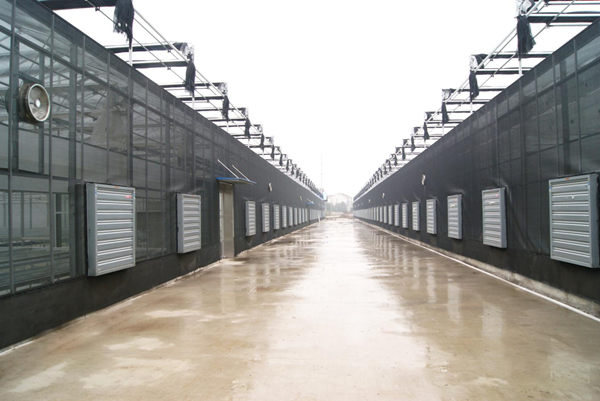
First, temperature gradient design
The temperature gradient difference between the fan and the water curtain should not be more than four degrees. This needs to design fan water curtain exhaust distance should not exceed 48 meters. Because the exhaust effect beyond the exhaust distance of the fan is reduced, the temperature of the air inlet of the water curtain is low, and the temperature of the air outlet at the fan location is high.
Two, Cooling Pad &Fan System principle
1. The fan starts to pump air outward to produce negative pressure outdoor air through the water film of the water curtain to evaporate and absorb heat to cool down. So there are two main functions the first is the ventilation function, the second is the evaporative cooling function.
2. The cooling principle is that humidity increases and the temperature decreases. Therefore, the cooling effect is good in north China, and the effect is worse in high humidity areas.
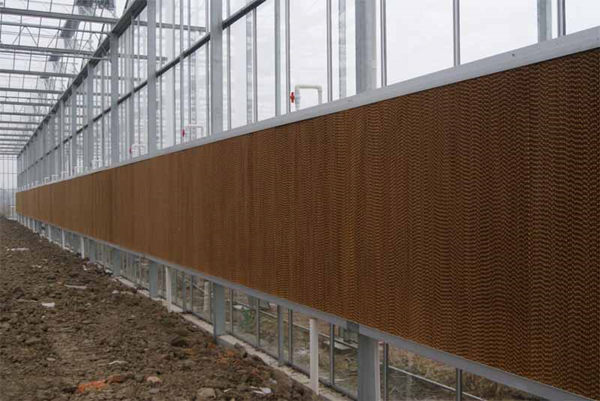
Three, Cooling Pad &Fan System layout need reference data
1, the number of fans, which is related to the intelligent greenhouse internal ventilation volume.
2. The area and height of the water curtain are related to the heat absorption effect of evaporation.
3, the water volume and head of the pump. The length of water curtain for a normal pump should not exceed 40 meters.
4. The size of the reservoir is related to the water supply.
Rainwater will cause certain harm to the greenhouse, so it is necessary for us to do a good job of rain proofing the greenhouse. Growing vegetables in a greenhouse is a popular way at the moment. There are many types of greenhouses, large or small. Remind everyone to do this in terms of rain protection.
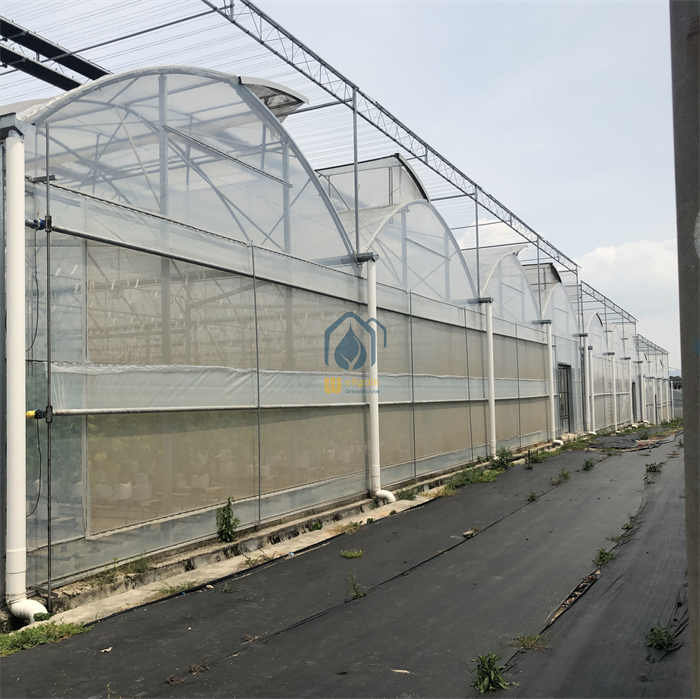
First of all, the top vent of the greenhouse is rainproof. During the construction of the greenhouse, the position of the air outlet is located on the top of the greenhouse. Do not allow rainwater to pour over the top due to drainage and cause damage.
There is a waterproof membrane on the top. Prepare a plastic film with good light transmittance, the length is determined according to the greenhouse, and the width is determined according to the size of the tuyere. The upper end is fixed under the greenhouse, the two ends are fixed with iron wires, the middle can be fixed with a rope, and the lower end is fixed on the column under the tuyere, so that the rainwater will flow down and flow into the canal.
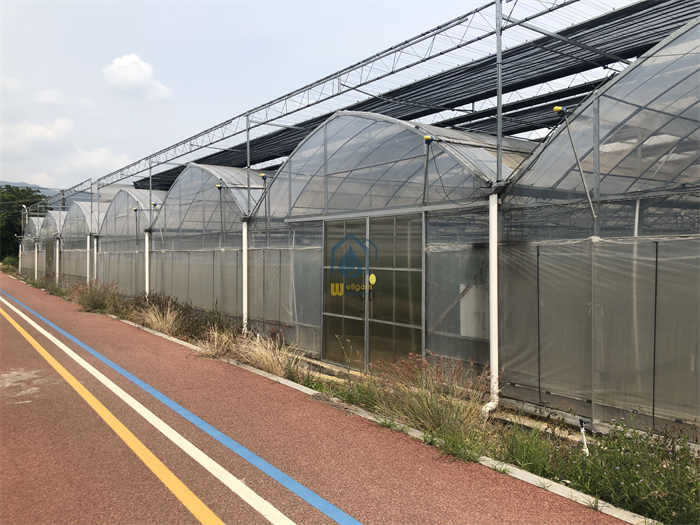
Due to the high humidity after rain, in order to prevent the infection and spread of germs, it is necessary to promptly clean up the residual branches, fallen leaves, and the diseased plants in the field, and clean up the old leaves, yellow leaves and diseased leaves at the lower part of the plants, and concentrate the treatment to reduce the germs. When conditions permit, the greenhouse shall increase the ventilation and humidity. Wind and rainy weather will cause a lot of sludge to splash on vegetable leaves. It can be combined with spraying foliar fertilizer or spraying to clean the sludge on the back of the leaves to enhance the effect of light and quickly restore growth. After the heavy rain, soil compaction occurs in the field. It is necessary to wait for the rain to stop and the sky should be fine, and seize the time to carry out cultivating and loosening the soil to improve the physical and chemical properties of the soil and increase the vitality of the root system.
- Buddha Jump Over the Wall1
- Canned Abalone2
- Canned Turtle Soup1
- Edible Bird's Nest2
- Frozen Foods1
- Frozen Seafood8
- Jelly/Pudding Applications1
- Meat Product Applications2
- Others Applications5
- Plant-based meat Product Applications1
- SURIMI2
- Soft Candy1
- Soft Candy Applications4
- bottle1
- can end2
- packaging film2
- tableware3